Introduction
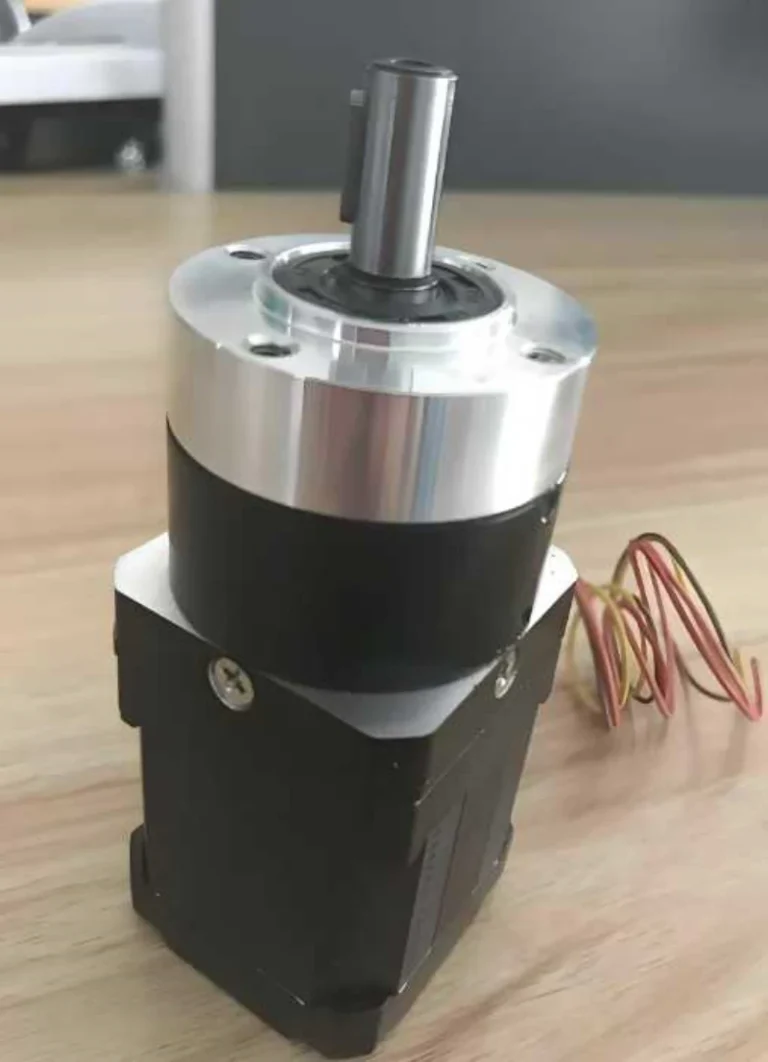
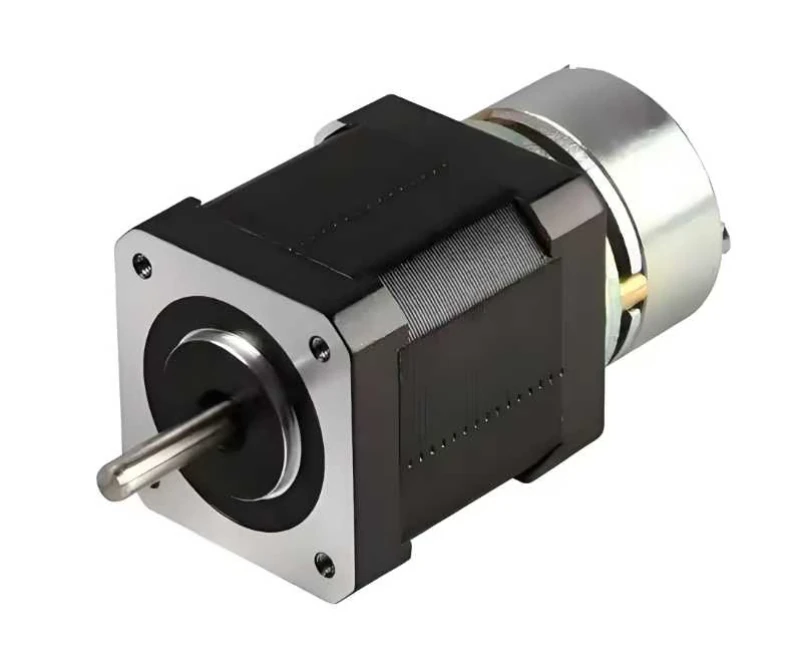
Stepper motors are one of the most widely used motion components in embedded systems, robotics, 3D printing, and industrial automation. Unlike ordinary DC motors that rotate continuously when powered on, stepper motors move in fixed discrete “steps.” This unique feature allows engineers to achieve precise position and speed control without expensive encoders or complex closed-loop systems, making them the preferred choice for low-to-medium precision motion scenarios.
What Exactly Is a Stepper Motor?
Most common two-phase stepper motors have a standard step angle of 1.8°, meaning the motor completes one full rotation (360°) with exactly 200 steps. This fixed step characteristic lays the foundation for open-loop precise positioning.
Core Working Principle
Stepper motors rely on the alternating energization of stator coils to generate a rotating magnetic field, which pulls the rotor to align with the magnetic field step by step. The motor consists of two key parts: a fixed stator with multiple phase windings and a movable rotor with magnetic teeth or permanent magnets.
When the controller energizes the stator windings in a specific sequence (such as A-AB-B-BA for two-phase motors), the magnetic field direction changes sequentially. The rotor will automatically rotate to the position with the smallest magnetic resistance, completing a single step movement. Continuous ordered pulse signals drive the motor to rotate steadily.
Key Advantages of Stepper Motors
- High open-loop positioning accuracy: Fixed step angle ensures repeatable positioning without encoders.
- Excellent static torque: The motor maintains strong holding torque when stationary, preventing load offset.
- Simple control logic: Only pulse and direction signals are needed, compatible with most MCU and PLC controllers.
- High cost performance: Lower cost than servo systems for medium and low-speed precision motion.
Common Application Scenarios
3D printer extrusion and platform movement, CNC small machine tools, surveillance camera pan-tilt, automated sorting equipment, robot joint rotation, and smart home electric adjustment structures.
Summary
Stepper motors are the best entry-level solution for precise digital motion control. Their step-based working mode simplifies motion programming greatly. In the next blog, we will dive into the detailed classification of stepper motors and their structural differences.