Introduction
Traditional stepper motors adopt open-loop control, which is simple and low-cost but prone to step loss in high-load and high-speed scenarios. To solve this pain point, closed-loop stepper motors are widely used in high-precision industrial scenarios. This blog deeply compares open-loop and closed-loop stepper systems and analyzes their upgrade logic and application boundaries.
1. Open-Loop Stepper Motor System (Traditional Scheme)
Working principle: The controller sends pulse signals to the driver, and the motor rotates corresponding steps according to the pulses. There is no feedback mechanism, and the system defaults that the motor completes the action accurately.
Advantages: Low cost, simple wiring, easy programming and debugging, stable performance in low-load and low-speed scenarios.
Disadvantages: No error correction function. When the load is sudden or the speed is too fast, step loss will occur, resulting in permanent position deviation; unable to monitor motor operating status in real time.
Applicable scenarios: 3D printing, small engraving machines, and low-load automated equipment with stable load.
2. Closed-Loop Stepper Motor System (High-Precision Scheme)
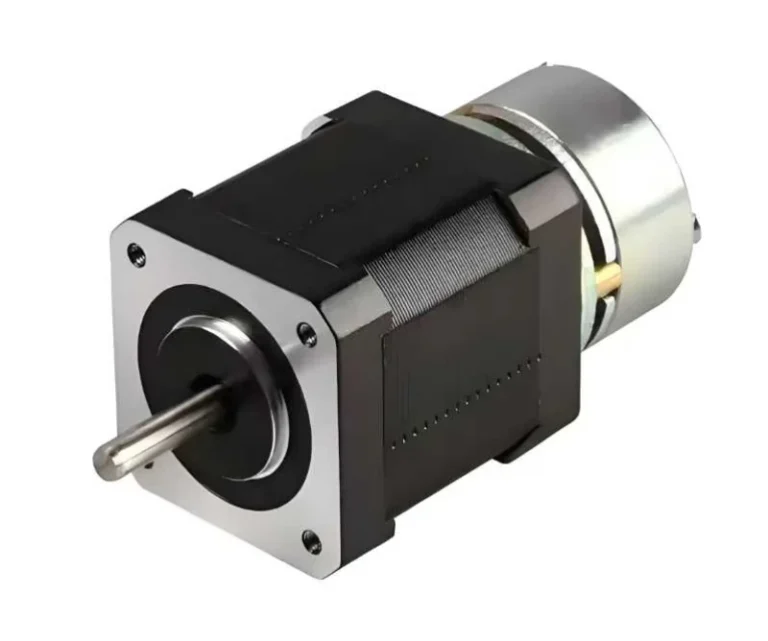
Working principle: Based on the traditional stepper motor, a high-precision encoder is added to collect the rotor real-time position data. The driver compares the target pulse with the actual rotation position in real time. Once step loss or position error is detected, it will automatically compensate and correct.
Core Advantages:
- Zero step loss: Real-time feedback and error correction to eliminate position deviation.
- Higher speed performance: Support higher operating speed with stronger overload capacity.
- Lower heat generation: Automatically adjust current according to load, no useless power consumption.
- Real-time status monitoring: Feedback speed, position, overload and other data for system diagnosis.
Disadvantages: Higher cost, more complex wiring and debugging, higher requirements for controller performance.
Applicable scenarios: High-speed and high-load industrial automation, precision inspection equipment, multi-axis linkage equipment, and scenarios requiring long-term uninterrupted operation.
Open-Loop vs Closed-Loop Core Comparison
Open-loop: Low cost, simple control, easy step loss, suitable for low-precision stable load | Closed-loop: High cost, high precision, anti-interference, zero step loss, suitable for industrial high-demand scenarios
Upgrade Suggestions
For ordinary maker projects and low-load civilian equipment, open-loop stepper motors are sufficient and cost-effective. For industrial mass production, high-precision positioning, and variable load scenarios, closed-loop stepper motors are recommended to replace open-loop schemes to improve system stability.
Summary
Closed-loop stepper motors make up for the core defect of open-loop step loss. The two schemes have their own advantages. Engineers can select the appropriate control scheme according to project precision, load, and cost budget.