

Linear Stepper Motors
Lead Screw Stepper Motors for Precise Linear Motion
A range of stepper motors with lead screw configurations designed to convert rotary motion into controlled linear movement for positioning, feeding, and automated motion applications.
Key Specifications
- Integrated Lead Screw Design
- Direct Rotary-to-Linear Motion
- Multiple Frame Size Options
- Single- and Double-Shaft Configurations
- Suitable for Automated Motion Systems
Overview
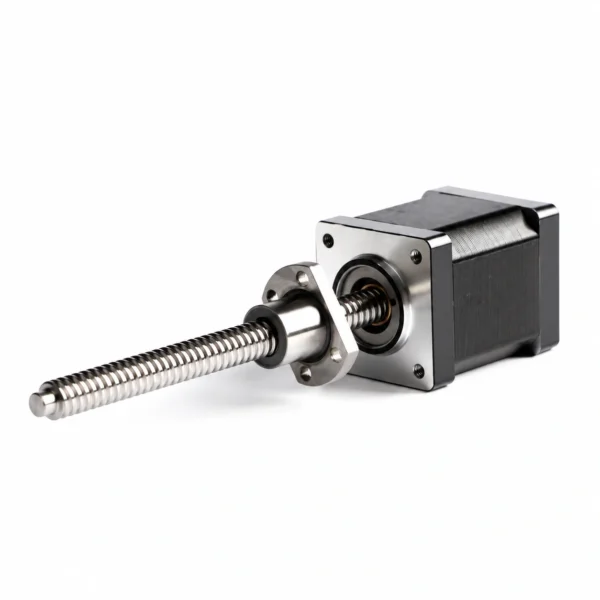
Linear Stepper Motors combine stepper motor technology with lead screw mechanisms to provide controlled linear movement directly from the motor shaft. This configuration eliminates the need for a separate rotary-to-linear transmission mechanism in applications where direct linear actuation is preferred.
The product range includes different frame sizes and mechanical configurations, including lead screw stepper motors and double-shaft configurations. These options allow equipment designers to select a suitable motor structure according to available installation space and motion requirements.
Linear stepper motors can be used in equipment requiring controlled linear positioning, feeding, adjustment, or reciprocating movement, particularly where compact construction and straightforward mechanical integration are important.
Key Features
Lead Screw Integration
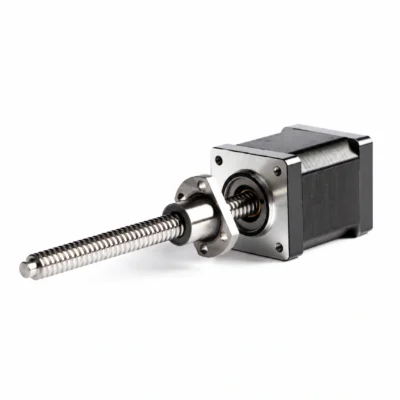
The lead screw is integrated with the stepper motor configuration to provide direct linear movement from controlled motor rotation.
Multiple Frame Sizes
Different frame size options are available across the product range, allowing selection according to equipment space and mechanical requirements.
Flexible Mechanical Configurations
The range includes different shaft and lead screw configurations, including double-shaft options for applications requiring mechanical access from both sides.
Direct Linear Actuation
The integrated motor-and-lead-screw structure can simplify mechanical transmission in equipment requiring controlled linear movement.
Easy System Integration
The motor configuration can be incorporated into automated positioning, feeding, adjustment, and other linear motion mechanisms.
Applications
Linear stepper motors can be considered for equipment and mechanisms requiring controlled linear movement, including:
- Automated positioning mechanisms
- Linear feeding systems
- Adjustment and alignment mechanisms
- Compact automation equipment
- Instrumentation and laboratory equipment
- Actuation and reciprocating mechanisms
- CNC and motion-control equipment
- Automated machinery
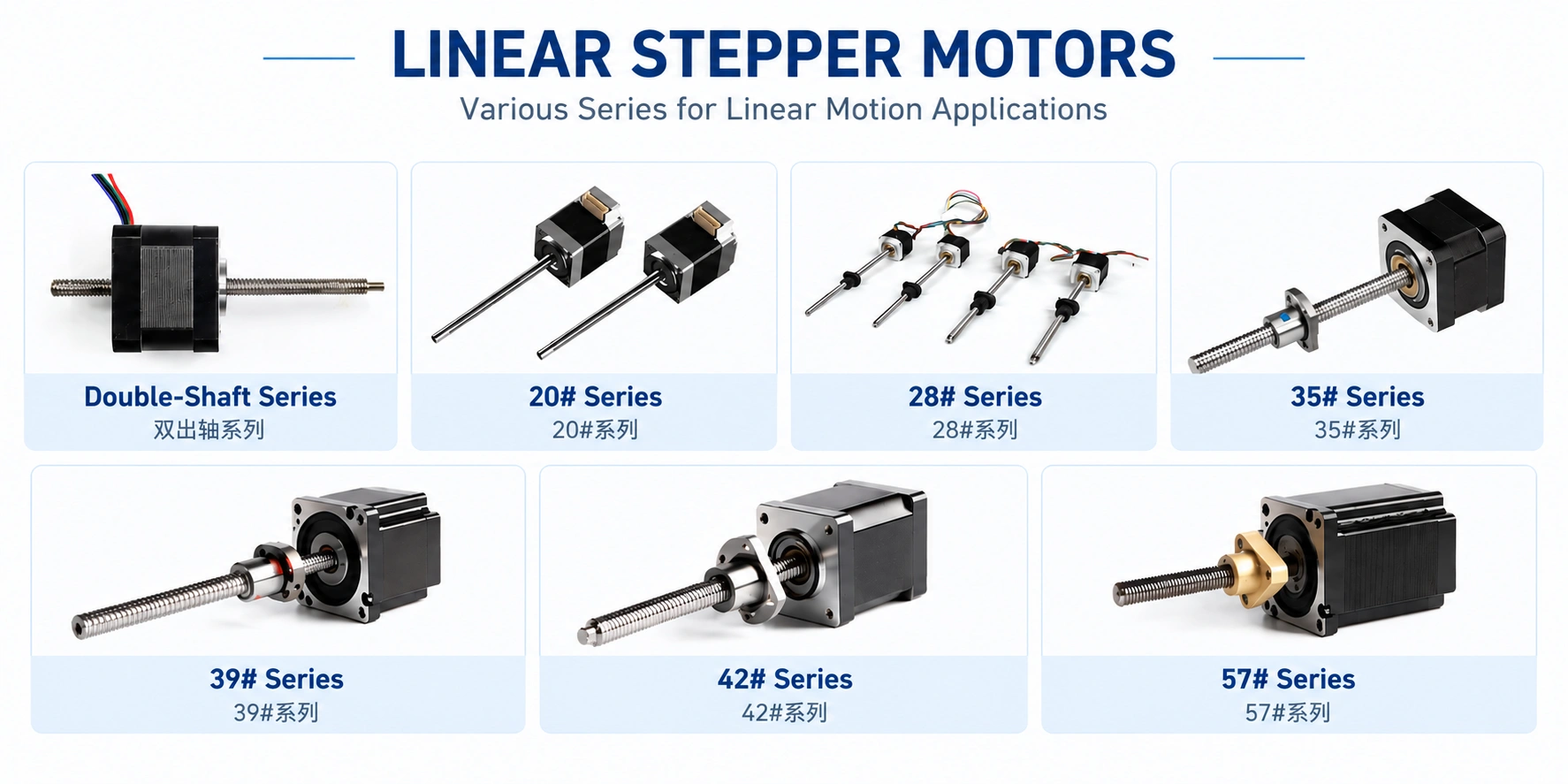
Linear Stepper Motor Range
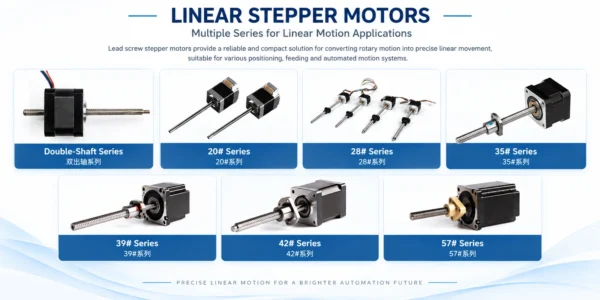
Our linear stepper motor range includes multiple frame sizes and lead screw configurations, providing options for different mechanical installation and linear motion requirements.
| Series / Configuration | Description |
|---|---|
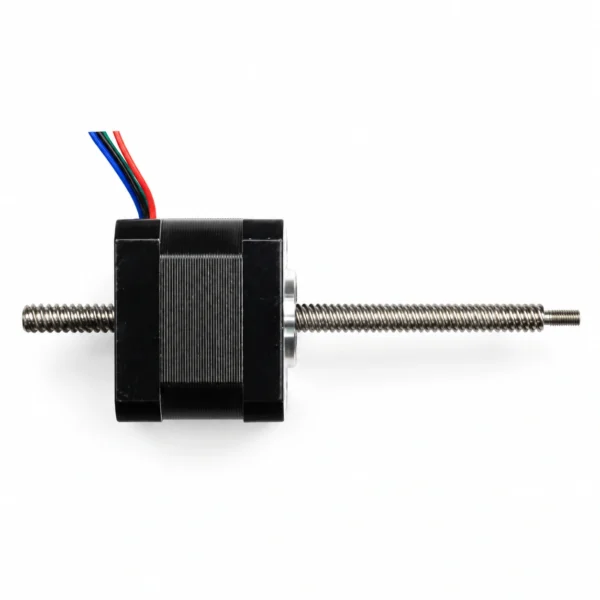
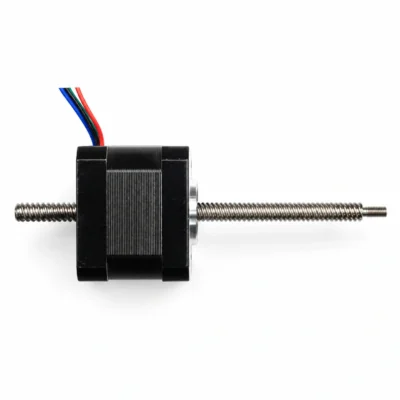
| Double-Shaft Series | Linear stepper motor configuration with a lead screw extending through both sides of the motor. |
| 20 Series | Compact frame linear stepper motor series with lead screw configuration. |
| 28 Series | Compact linear stepper motor series with integrated lead screw configuration. |
| 35 Series | Linear stepper motor series with lead screw configuration for direct linear motion. |
| 39 Series | Linear stepper motor series with lead screw configuration for linear positioning and motion applications. |
| 42 Series | Linear stepper motor series with a larger frame configuration for linear motion applications. |
| 57 Series | Larger-frame linear stepper motor series with lead screw configuration. |
Linear Stepper Motor Configurations
Linear stepper motors are available in different configurations to accommodate various linear motion requirements. The available series include different motor sizes and lead screw configurations for applications requiring precise linear positioning and controlled motion.
How to Select a Linear Stepper Motor
When selecting a linear stepper motor, consider the following factors:
1. Motor Frame Size
Select the appropriate frame size according to the available installation space and required motor dimensions.
2. Lead Screw Configuration
Consider the required screw arrangement and mechanical connection according to the linear motion mechanism.
3. Required Linear Motion
Consider the required travel, movement speed, load, and operating cycle when selecting the motor configuration.
4. Installation Configuration
Check shaft direction, mounting dimensions, motor length, and other mechanical interfaces before integration.
5. Electrical Requirements
Match the motor’s current, resistance, inductance, step angle, and other electrical characteristics with the selected stepper driver.
FAQ
1. Can a linear stepper motor provide direct linear movement?
A: Yes. A linear stepper motor with an integrated lead screw converts the motor’s rotary movement into linear movement, allowing it to be directly incorporated into linear positioning or feeding mechanisms.
2. How do I select the appropriate linear stepper motor?
A: Selection should consider the required motor frame size, lead screw configuration, available installation space, electrical characteristics, and the required linear load, travel, and operating speed.
3. Can the linear stepper motor be customized?
A: Different motor configurations and mechanical requirements may be available depending on the product series. For applications with specific dimensional, electrical, or mechanical requirements, please contact us with your application details for confirmation.
评价
目前还没有评价